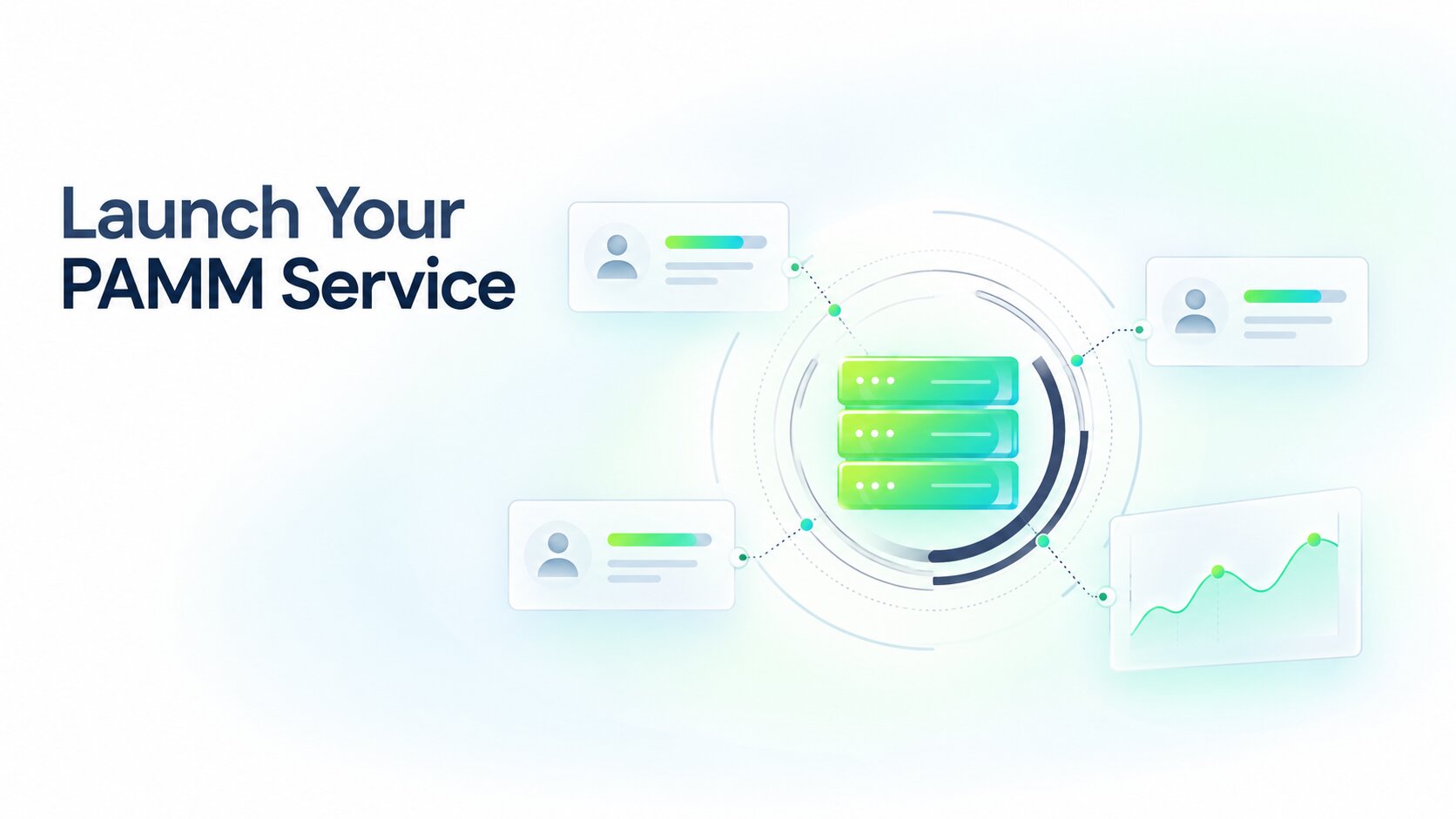
A PAMM service can connect investors with experienced money managers. But launching one isn’t as simple as installing PAMM software and opening the doors to traders. You also need to define how managers are approved, how investor funds are allocated, which fees apply, what risk controls are available, and how the service will fit into your existing brokerage setup.
This guide breaks down how to launch a PAMM service step by step. It focuses on the decisions you need to make before going live and helps you build a PAMM offering that is operationally clear and easy for clients to understand.
TL;DR
- The modelA PAMM (Percentage Allocation Management Module) pools investors’ money into a single account managed by a money manager. Then splits profits, losses, and fees according to each investor’s share at every rollover.
- The business caseBrokers launch PAMM to keep passive clients on the books, lift trading volume, and open a new revenue line.
- The launch processLaunching a PAMM service comes down to seven steps: pick a tech provider, set up money manager accounts, define investor risk limits, build the investor portal, configure fees and automation, pilot with a few managers, then promote.
- The technologyBrokeree’s PAMM runs across MT4, MT5, and cTrader from a single broker-side panel and automates accounting, so your team can supervise the service rather than run it manually.
Why Offer PAMM Service?
Retail trading is hard for traders and brokers, and the numbers show it. Regulatory data across the industry shows that 75 to 89 percent of retail trading accounts lose money, and many new traders stop within their first few months. A managed account solution gives those clients another way to stay.
Here is what a PAMM system for brokers offers:
You keep passive clients instead of losing them
Not everyone wants to trade. Some clients would rather hand allocation to someone who does it full-time. With PAMM, they pick a money manager, allocate funds, and stay inside your ecosystem. You capture demand you were already turning away. Without a managed option, those clients leave for a broker who has one.
Trading volume goes up
A money manager actively trades on behalf of every investor in the pool, so the pooled capital stays in the market rather than sitting idle. That activity generates trading volume, and you add no operational load per trade.
You open a new revenue line and a new client type
PAMM attracts a different audience than your active traders. These are investors who want structured, rule-based participation. It also gives your best-performing traders a reason to stay and grow, since they can earn performance and management fees by taking on investor capital. You serve both groups from the same infrastructure.
Increase engagement with the brokerage
A PAMM service can create an ecosystem involving investors, money managers, and the broker.
Investors can evaluate available managers, monitor performance, allocate capital, and review their investment history. Managers can build a track record and attract investors. The broker oversees the environment and establishes the rules under which the service operates.
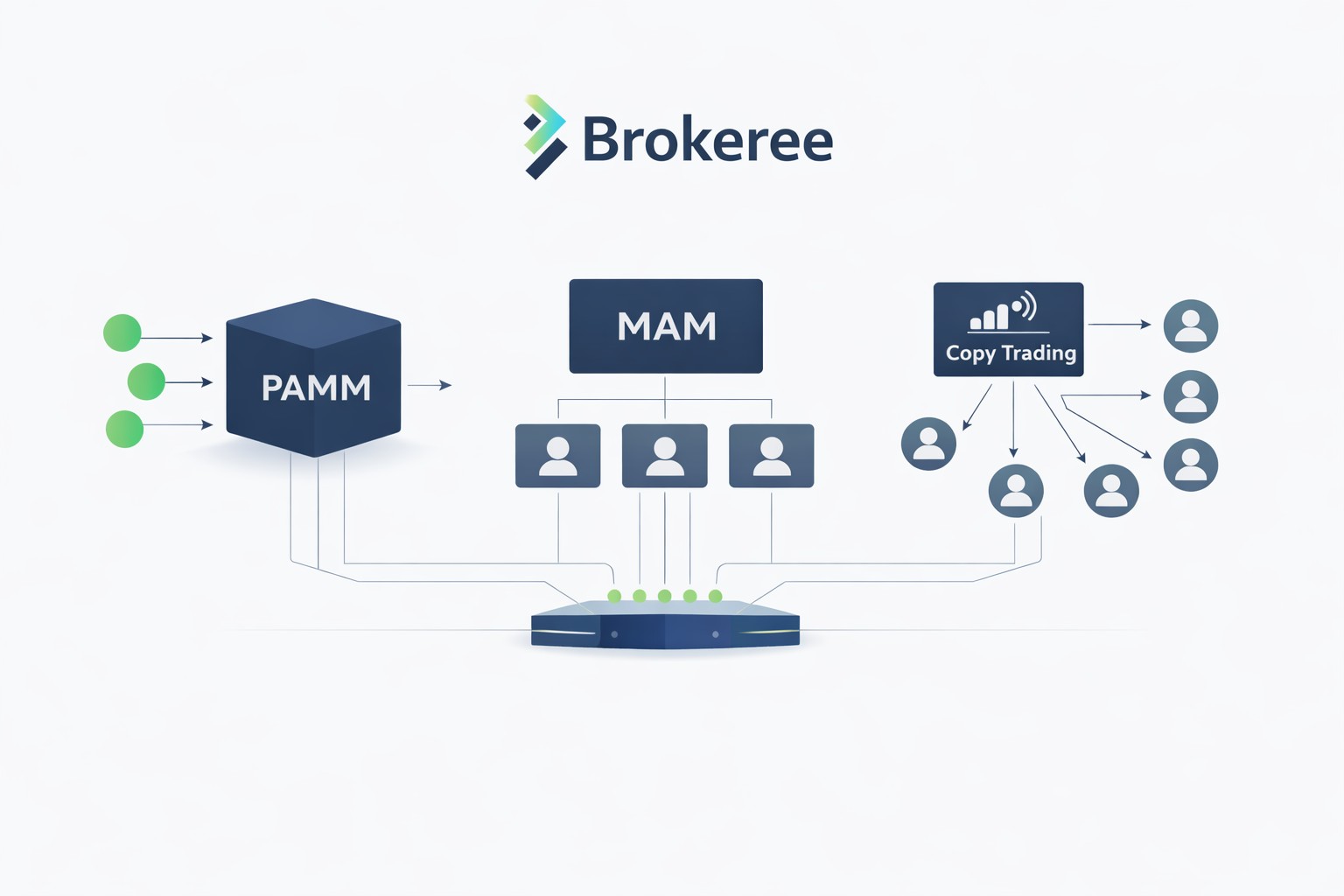
If you are still weighing PAMM against other managed models, this breakdown can help: PAMM vs MAM vs Copy Trading: Full Comparison for Multi-Asset Brokers.
How to Launch a PAMM Service in 2026
Choose a tech provider
The right PAMM software makes the whole service easier to run: clean onboarding, reliable automation, and room to scale as more managers and investors join.
Evaluate providers against a short, concrete checklist:
- Platform coverage: If your brokerage runs on MT4, MT5, or cTrader, choose a PAMM solution that covers all the platforms.
- Cross-platform pooling: Can a manager on one trading platform accept investors from another? Software that unites clients across servers into a single pool broadens the investor base for every manager you onboard, rather than trapping each manager on a single server.
- Broker-side control and staff access: You should be able to approve managers, set the rules, and configure the service from an admin panel. Also, look for role-level access, so your operations, dealing, risk, and support staff each get the permissions their job needs.
- CRM and platform integration: Your PAMM service should integrate with the tools you already use. Check that it integrates with your CRM and onboarding workflows so client data and sign-ups flow through a single system. For brokers on a proprietary or crypto platform, some providers now offer PAMM integration through an API that embeds managed account services into custom infrastructure without deploying a standard terminal at all.
- Onboarding and support: A provider that installs in your demo environment, walks your team through the setup, and stays reachable saves you weeks. Ask what onboarding and ongoing support include before you sign.
02Configure fund manager accounts
With a tech provider in place, set up your money managers. This is where you decide who trades investor capital and under what terms.
The core steps look like this:
- Approve the manager: Review each candidate before their offer reaches clients. Run KYC checks and review real trading history. A good PAMM system lets the broker vet and approve managers before their offers go live to investors.
- Set up the manager’s trading account: The system creates a separate account for the manager to trade pooled funds. Investors cannot place trades in it; they participate by allocation.
- Define the offer terms: Decide how investors join, leave, and participate, along with any minimum allocation and the investment period.
If your software supports cross-server pooling, a single manager can attract investors across all your terminals, so you do not need to duplicate the setup on each server. That is one of the practical reasons brokers pick a multi-platform PAMM solution for forex brokers over a single-terminal tool.
03Set investor risk parameters
Look for these controls in any PAMM platform, and configure them from the start:
- Stop-Loss per investment: The money manager sets an acceptable loss level for each investor, and the system automatically closes that investment once the level is reached, returning any remaining funds to the client. As the broker, you enable this control so each investor’s exposure stays capped regardless of the manager’s strategy.
- Partial close on withdrawal: If a withdrawal would push the account toward a margin call or stop-out, the system should close positions in proportion to the withdrawable amount, thereby protecting the remaining investors’ funds.
- Withdrawal confirmation windows: When an investor requests a withdrawal, the manager is notified and, after a set period (for example 30 minutes), the request is confirmed automatically. That gives the manager time to adjust open positions.
- Event notifications: Automatic email alerts to investors, managers, and admins for rollovers, withdrawals, and other key events mean nobody has to log in to know what happened.
For a deeper look at how these controls build investor confidence, see Building Investor Trust: Secure and Transparent PAMM on cTrader.
04Build the investor portal
The portal is what investors see, so it does a lot of the selling for you. It needs to answer two questions at a glance: who should I invest with, and how is my money doing? Two features carry most of the weight here:
- A ratings and statistics view: A built-in ratings module that shows each manager’s trading performance lets investors compare managers using real data and make an informed choice rather than guessing.
- Leaderboard widgets for your public site: Custom widgets built from the trading information of specific accounts or groups, embedded on your website, turn site visitors into curious leads. Interactive charts of your top managers are marketing that runs itself.
Within the portal, investors should be able to access their trade history and request investment reports for specific periods, ideally delivered by email on a schedule. Transparency like this is what keeps a passive investor comfortable staying invested.
05Configure fees and automation
This step determines how you and your managers earn.
Regarding fees, most PAMM systems allow you to enable several models: a performance fee (a share of profits), a management fee (a flat periodic charge), and sometimes fees for early investor deposits or withdrawals. A common setup pairs a performance fee with a management fee, which keeps managers motivated while giving investors a predictable cost.
On automation, the rollover does the accounting. At each rollover, trade results are allocated between investors and their manager based on their respective shares, calculated from the manager’s current profit on the platform. Rollovers run on a timer you set or can be triggered manually by an admin or manager. You define the schedule once, and the distribution takes care of itself after that.
06Pilot with a few money managers
Do not open the doors to everyone on day one. Start with two or three managers with a clean track record who are willing to work with you through the early weeks. A pilot lets you:
- Confirm rollovers, allocations, and fee calculations behave the way you expect.
- Check that notifications and reports reach investors on schedule and are easy to read.
- Gather feedback from real managers and investors before you scale.
A provider that sets up in your demo environment first is worth its weight here, since your pilot then runs on a configuration your team already understands. Fix what the pilot surfaces, then widen access to more managers and clients.
07Promote your PAMM service
A PAMM service nobody knows about earns nothing. Once the pilot proves out, put it in front of clients. The next section covers how, so keep this step in mind as the handoff from launch to growth.
How to Promote a PAMM Service
PAMM promotion works best when it explains how the service works. Build dedicated pages that explain the investment process, introduce eligible money managers, show relevant performance information, and make fees and risks easy to find. Email campaigns, educational content, manager interviews, and events can then direct existing and prospective clients to the service.
Start Your PAMM Services with Brokeree
Now that you know what it takes to launch a PAMM service, you need a provider that offers all of the above and more. This is where Brokeree’s PAMM comes in. It runs across MetaTrader 4, MetaTrader 5, and cTrader from a single broker-side panel, unites clients across different terminals into one investment pool, and carries over the risk controls covered earlier, including per-investment Stop-Loss, proportional position closing on withdrawals, and automatic event notifications.
Brokeree’s PAMM also integrates with the tools you already use. It connects to CRM and onboarding workflows and its PAMM Integration API lets brokers, financial institutions, and crypto companies embed the same money management infrastructure into proprietary platforms.
Managing all of this is easier with the redesigned PAMM Admin Portal, which gives your team a single place to manage money managers, investments, transactions, and requests. From there, you can search and filter operational records, configure PAMM services, monitor request statuses, and export transaction data. The interface now shares the look and navigation of Brokeree’s other investment products, so a team familiar with one product quickly picks up the rest.
Ready to see it in action? Request a demo to explore PAMM for cTrader and MT4/MT5.
Frequently Asked Questions
What is a PAMM service?
A PAMM (Percentage Allocation Management Module) service allows investors to allocate funds to a money manager who trades in a single pooled account. At each rollover, profits, losses, and fees are distributed to each investor based on their proportional share of the account.
How long does it take to launch a PAMM service?
It depends on your platform and how prepared your team is, but the sequence is the same: choose a provider, configure managers and risk rules, build the investor portal, set fees and automation, run a pilot, then promote. A provider that installs in your demo environment and trains your team shortens the path to go-live.
Which platforms support PAMM software for brokers?
PAMM software is commonly available for MT4, MT5, and cTrader, and some providers extend it to proprietary platforms through an integration API. Cross-platform tools let a manager on one terminal accept investors from another terminal.
What is the difference between PAMM and copy trading?
In PAMM, investor funds sit in one shared account, and results are allocated proportionally, with no trades copied. In copy trading, each follower keeps a separate account, and the provider’s trades are copied into it at a scaled volume. PAMM suits investors who prefer to hand allocation to a manager; copy trading suits those who want to keep control of their own account. See the full comparison.
How does a PAMM service make money for a broker?
Pooled investor capital under active managers raises overall trading volume, and the broker earns commissions on that volume. Managers earn performance and management fees, which gives your best traders a reason to bring investor capital onto your platform.
Can a PAMM service manage investor risk?
Yes. A capable PAMM system offers settings such as per-investment Stop-Loss levels, proportional position closing on withdrawals to protect remaining investors, withdrawal confirmation windows, and automatic event notifications.