Two brokers can offer the same copy trading service while running completely different businesses under it. One installs the software on its own servers. The other rents it from a vendor who holds the data and runs the system offsite. From the client’s screen, both look identical. Behind the scenes, they are not.
This article is about that hidden difference. Self-hosted copy trading software for brokers means the platform runs inside infrastructure you own or lease, not on a vendor’s machines. We will cover what that setup involves, how it shapes your data, costs, execution, and risk rules, and how it compares with a hosted service.
What Is a Self-Hosted Copy Trading Solution?
A self-hosted copy trading solution is software you install and run on infrastructure you own or lease.
It means the copy trading platform is deployed on your own server, a private cloud, or a dedicated VPS running within your brokerage’s environment. The plugins, if any, live next to your trading server, alongside the rest of your stack.
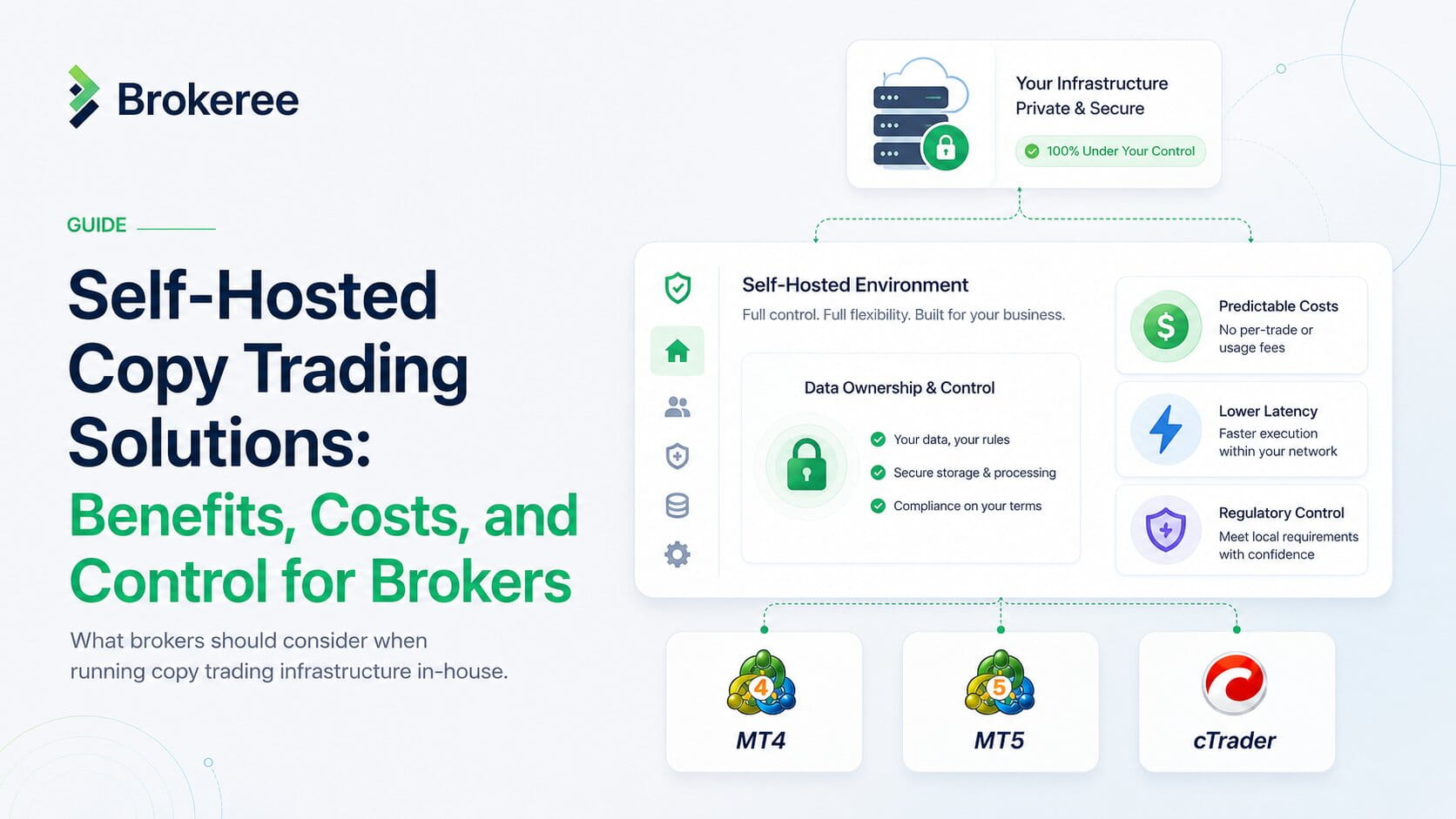
This is the opposite of a managed SaaS setup, where the technology vendor owns the servers, stores the data, and controls the environment in which the system runs. With a server-hosted copy trading platform under your roof, the trade data, client records, and execution logic all remain within infrastructure under your control.
Top 3 Advantages of Self-Hosted Copy Trading Solutions
1. Full Data Ownership and Regulatory Control
When the copy trading system runs on your servers, every trade record and client detail stays inside your environment. For regulated brokers, keeping records in-house is important because regulators or compliance teams may need immediate access to trading records.
2. Predictable Copy Trading Software Costs
Per-user and revenue-share pricing means your bill grows in step with your follower count. A self-hosted license separates the two, so your trading volume can climb while licensing costs typically remain independent.
3. Lower-Latency Trade Execution
Self-hosting removes the additional network hop to a vendor-managed environment, which can reduce execution latency when deployed close to the trading server. The shorter route can improve execution speed during trade replication.
What Self-Hosting Asks of Your Team
Running the platform on your own infrastructure does come with responsibility. Your team handles the servers the software lives on, including uptime, capacity, and the environment around the plugins.
For many brokers, this usually overlaps with the work their IT team already does for the trading servers themselves, since the copy trading software sits alongside them. Updates and technical support for the solution itself often remain with the provider, so owning the infrastructure does not mean maintaining the software alone.
Self-Hosted vs. SaaS Copy Trading Vendors
| What Matters | Self-Hosted Copy Trading | SaaS Vendor-Hosted Solution |
|---|---|---|
| Data ownership | Stays inside your environment, under your control. | Held and managed on the vendor’s servers. |
| Pricing | Licensing is typically independent of client growth. | Often based on per-user or revenue-share pricing and may increase as the brokerage scales. |
| Execution latency | Can reduce network hops when deployed alongside the trading server. | Replication traffic may pass through vendor-managed infrastructure before reaching the trading server. |
| Vendor dependency risk | Lower dependence on external infrastructure. | Greater dependence on the vendor’s infrastructure, availability, and product roadmap. |
Ready to Own Your Copy Trading Infrastructure?
Brokeree’s Social Trading
is copy trading software for brokers that installs directly onto existing MT4, MT5, and cTrader platforms.
Onboarding starts with installing the solution in your demo environment, followed by a walkthrough of the features so your team can configure a setup that suits your brokerage. From there, you approve your signal providers and set follower rules and risk controls.
When a provider opens, changes, or closes a position, the same trade is mirrored into followers’ accounts and sized according to the copying method selected by the broker or follower.
All of this runs inside the infrastructure you own. The data, rules, and execution stay with you, and the licensing model is not tied to follower growth.
Want to see how it fits your setup?
FAQs
What Does Self-Hosted Mean for Copy Trading Software?
It means the copy trading platform runs on your servers within your own environment, rather than on a vendor’s machines. Your organization retains control over the data, sets the rules, and controls how the system runs.
Does Self-Hosting Copy Trading Software Help With Regulation?
Yes, it can. Keeping trading and client records under your control can simplify internal governance, data management, and record retrieval. Whether it is the right approach depends on your regulatory obligations and infrastructure strategy.
Can a Self-Hosted Platform Copy Trades Across Different Platforms?
Yes.
Brokeree’s Social Trading
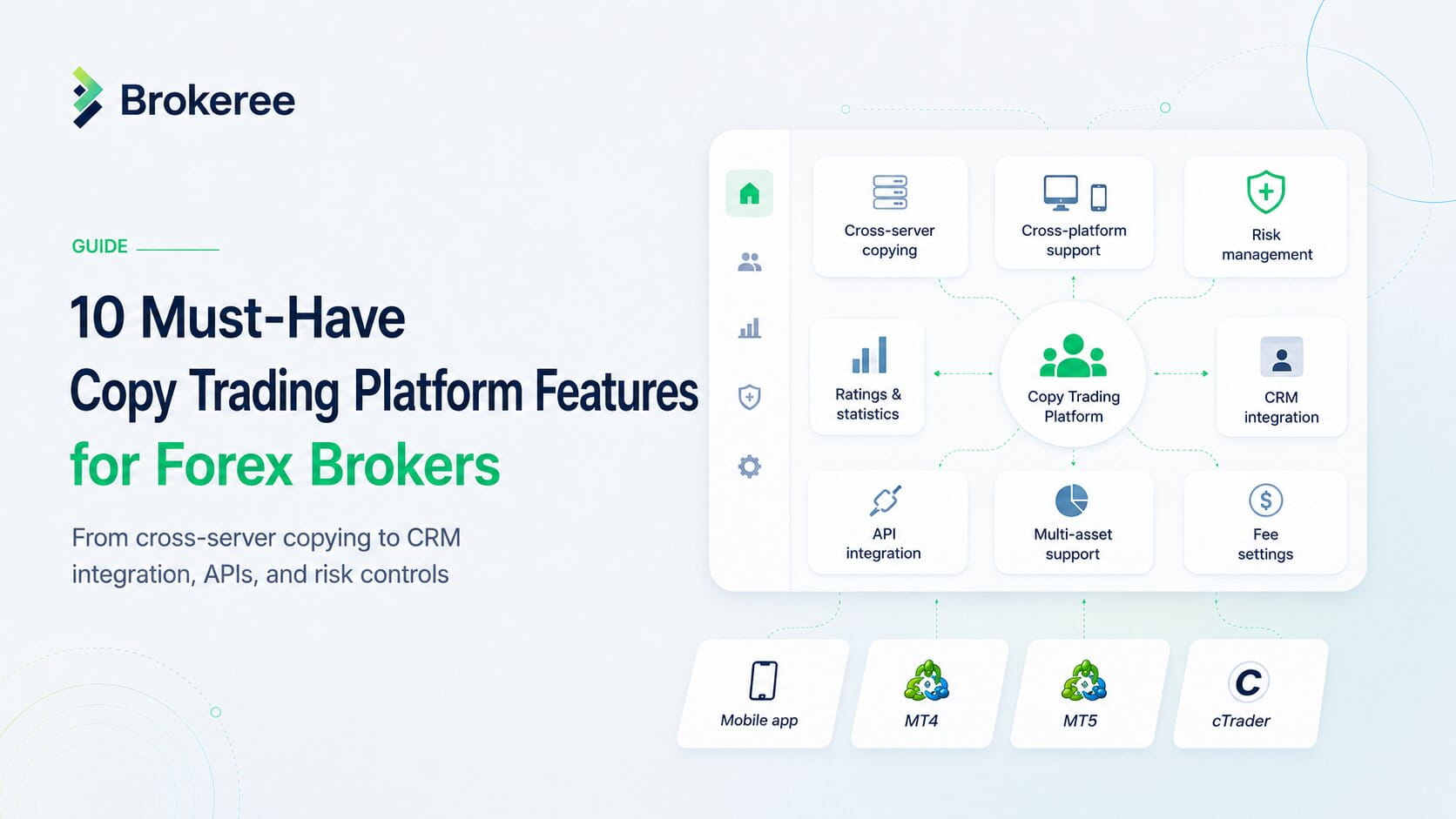
supports cross-platform copying, so traders on MT4, MT5, and cTrader can share and copy signals within the same environment.